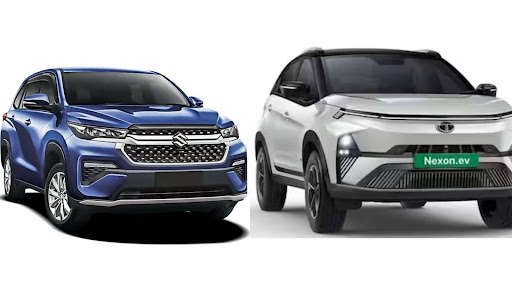
The world automotive business is changing quite fast, with drivers seeking cleaner and more efficient ways of traveling rather than using conventional petrol and diesel-powered cars. Increasing fuel prices, environmental issues, and state policies have forced hybrid cars and electric cars (EVs) into the mainstream. Although both of them are expected to lower the emission and operation expenses, a lot of buyers are still diverse concerning the actual distinction between an electric car and a hybrid car.
The car models may seem to be the same on the face of it, but in reality, they are totally different, with dissimilarity in terms of technology, source of power, maintenance, and long-term benefits of ownership. These are some of the differences that need to be understood before a purchase decision. This manual elaborates on the subject matter, aiding drivers in the contemporary world to make the correct choice that suits them.
What Is a Hybrid Car?
A hybrid is a car that is a combination of two propulsion systems:
-
A petrol or diesel engine
-
A battery-operated electric motor
A hybrid vehicle is primarily designed to be more fuel efficient and to have a lower emission rate by enabling the electric motor to assist or even substitute the internal combustion engine under some situations on the road.
How Hybrid Cars Operate
Hybrid cars have sophisticated onboard computers that decide the best source of power conservation. Typically:
-
The car is powered by an electric motor at low speed or when stuck in a jam.
-
The internal combustion engine replaces the two-stroke engine at highway speeds.
-
Both systems can be used during acceleration.
-
The wasted energy is reused to replenish the battery using regenerative braking.
The main good thing is that most of the hybrid vehicles do not need other charging, and thus they are simple to be embraced even by first-time users of the eco-vehicles.
Different Types of Hybrid Cars
The concept of hybrid categories is crucial to make a comparison between them and electric cars.
Mild Hybrid
-
Assisted by an electric motor is the engine.
-
And cannot drive on electric power.
-
Enhances a little fuel economy.
Full Hybrid
-
Can drive short distances with the use of electric power only.
-
Automation of power switching.
Plug-in Hybrid (PHEV)
-
Larger battery.
-
Can be charged externally.
-
Propositions made of an electric-only range.
Plug-in hybrids are positioned as an in-between of traditional hybrids and electric cars.
What Is an Electric Car?
An electric vehicle (EV) is completely run on electricity. It has:
-
No petrol or diesel engine
-
No exhaust system
-
No fuel tank
Rather, electric vehicles are powered by using large rechargeable batteries, which feed power to one or several electric motors.
How Electric Cars Work
-
Electric energy stored in the battery is changed to motion.
-
The process of charging takes place through home chargers or through public charging stations.
-
The battery is recharged during braking by energy recovery systems.
-
Electric vehicles provide a high responsiveness, smooth, and silent ride.
Basic Difference between Hybrid and Electric Cars.
|
Aspect |
Hybrid Car |
Electric Car |
|
Energy Source |
Fuel + Electricity |
Electricity only |
|
Fuel Dependency |
Yes |
No |
|
External Charging |
Optional (PHEV only) |
Mandatory |
|
Emissions |
Reduced |
Zero tailpipe |
|
Mechanical Complexity |
Higher |
Lower |
|
Future Compliance |
Transitional |
Fully future-ready |
Energy use and Fuel efficiency
Hybrid cars consume very little fuel compared to conventional petrol-powered cars. Hybrids can increase fuel economy by up to forty percent by consuming electric power when driving at low speeds and minimizing the amount of engine idling. Nevertheless, fuel use is also an aspect of everyday use, where maintenance costs are associated with fuel costs.
Electric vehicles are much more energy-saving. The majority of electric vehicles transform more than eighty-five percent of the stored energy into movement, whereas in combustion engines, the efficiency is far less. Electric power is also cheaper when compared to both petrol and diesel, and hence cheaper per kilometer. On the efficiency aspect, electric cars are obviously much better than hybrid vehicles.
Convenience, Refueling, and Charging
Hybrid vehicles are easy and familiar in terms of refueling. The car drivers will be able to fill up at any petrol station, and the battery will charge as one drives. This increases the attractiveness of hybrid cars,s particularly in regions where the charge infrastructure is still in its early stages.
Planning Electric cars will take longer because they are fully reliant on charging. The in-home chargers would be suitable to use during daily commute, and the public fast chargers to use in cases of long routes. The time of charge depends on the charge type and capacity of the battery. Despite the very fast growth in charging networks, coverage remains a matter of location and infrastructure investment. Hybrid cars are at a disadvantage in the convenience factor, although electric cars are slowly catching up.
Practical Use and Driving Range
The range of the combined driving of hybrid cars is usually longer due to the ability to switch without difficulties between fuel and electricity. This renders them appropriate for long highway trips and road trips with no worry that they will need to be recharged. Electric cars have improved a lot in this aspect. The range of modern electric vehicles has increased from three hundred to six hundred kilometers per charge, which is adequate for everyday commuting and urban transportation. Nevertheless, even long-haul travel can involve the planning of routes over charging stations.
Comparative Cost and Value of Ownership
The original cost of hybrid cars is normally cheaper as compared to electric cars. Advanced battery technology is more expensive, and electric vehicles are more expensive at the start. This difference tends to balance, however, in the long run. Electric vehicles are cheaper to run since they do not need any fuel and require much less routine service. The dual engine power systems of hybrid cars also mean that they still have to have their oil changed, engine service,d and maintained more frequently. Electric cars can be economical in the long-run despite being more expensive in the short-run.
Maintenance, Reliability, and Durability
Hybrid cars are sure, and also, mechanically complicated in that they embrace two propulsion systems. This can be complicated, ed leading to increased maintenance in the long run. Electric vehicles are less complicated in mechanics, and there are fewer moving components and no standard engine. This minimizeswears and tear and minimizes the probability of mechanical failure. The battery systems will have an extended life span, which is measured in years, and most companies havea long-term battery health warranty.
Sustainability and Environmental Impact
Hybrid cars emit less carbon dioxide than normal fuel vehicles, and they produce carbon dioxide as a result of the use of fuel. They are significant in minimizing fuel dependence, and they do not go carbon-free. Electric vehicles have zero tailpipe emissions, and they enhance the quality of air in cities significantly. The effect of their electricity on the environment, in general, is determined by the electricity generation process, although, even using conventional grids, electric vehicles tend to have a smaller tax on carbon over their lifetime.
Driving Experience and Performance
Hybrid cars make the drive very smooth and quiet, especially when traveling at a lower speed. The switch to the fuel power is typically smooth, and the experience of driving it is familiar. The electric cars provide immediate torque, noiseless acceleration, and prompt reactiveness. Electric cars are much more pleasurable to drive because of their smooth delivery of power and the absence of engine noise, which many drivers enjoy.
Which One Should You Choose?
Hybrid vehicles are the best for drivers who cover a long distance and also to those who may not have dependable access to charging sources or may want to make a gradual transition to electric-powered vehicles. The electric cars are more suitable for urban use, cheap in the long term, and those who care about sustainability and technology that is future-oriented.
Final Thoughts
Hybrid cars versus electric cars differ more than fuel choice. Hybrid cars are more flexible and convenient, and electric cars are cleaner, cheaper to run, and more in line with the trends in mobility in the future. Electric cars are the solution of choice in the long term as charging infrastructure is widening and battery technology advances. Nevertheless, hybrid vehicles are still a viable and effective choice for drivers looking for versatility in the present day.
FAQs
Emila Hales
My name is Emila Hales. I've been living in the UAE for the past five years, and I absolutely love traveling. Writing about my travel experiences is something I enjoy, and I'm excited to share my adventures with others who are passionate about exploring new places.
Learn More