Cars have been around for 125 years, but despite becoming incredibly complex and digitally sophisticated, one thing hasn't changed: they still need their engine's oil level checked regularly. If your car, SUV, truck, or minivan has a gas or diesel engine under its hood one of the most important things you can do to keep it running well and for a long time to come is to ensure that the engine always has enough oil in it. It's simple to know if your vehicle's oil level is where it should be: just follow the easy steps below to see how to check your car's oil properly. Electric vehicles, by the way, don't use lubricating oil, so you're free of that maintenance responsibility if you're driving an EV.
Most newer gasoline or diesel-powered cars will use virtually no oil between their required oil-and-filter changes. Then again, some do, and you have no way of knowing where your engine's oil level is at except to monitor it. Over time, most older cars, especially those approaching 100,000 miles, will likely burn a small amount of oil with each passing mile, a natural result of the engine's internals having worn. Those small amounts of oil can add up, so if you fail to keep an eye on oil consumption you could be in for some expensive repairs or worse. Running your engine out of oil can cause a catastrophic engine failure that will render your ride undriveable and in need of a new engine.
Here's how to keep that expensive problem from happening: check your oil once a week for a month and you'll know how quickly it gets depleted or if it gets depleted at all. Once you know that, you can check it less frequently say, once a month.
Why Engine Oil Is Important
Your car’s Engine is made up of many moving parts. These parts create friction and heat when they move. Engine Oil plays a key role in:
- Reducing friction between engine parts
- Cooling the engine
- Cleaning dirt and debris
- Preventing wear and tear
Without enough oil, your engine can overheat or even get permanently damaged.
Signs Your Car Needs an Oil Check
Before learning the steps, it’s helpful to know when to check your oil. Watch out for these signs:
- Oil warning light on the Dashboard Warning Light
- Engine making unusual noises
- Burning smell from the engine
- Reduced performance or overheating
Even if you don’t notice these signs, it’s a good habit to check oil at least once a month.
Tools You Will Need
Checking oil is easy and doesn’t require special tools. You just need:
- Oil Dipstick
- Clean Cloth or paper towel
- Funnel (if adding oil)
Protective Gloves (optional)
Step-by-Step: How to Check Oil Level in Car
1. Park Your Car on a Flat Surface
Make sure your Car is parked on level ground. This ensures an accurate reading.
2. Turn Off the Engine and Let It Cool
Switch off the engine and wait for 5–10 minutes. This allows the oil to settle into the Oil Pan.
3. Open the Hood

Pull the hood release lever inside your car and lift the hood. Secure it properly before proceeding.
4. Locate the Oil Dipstick
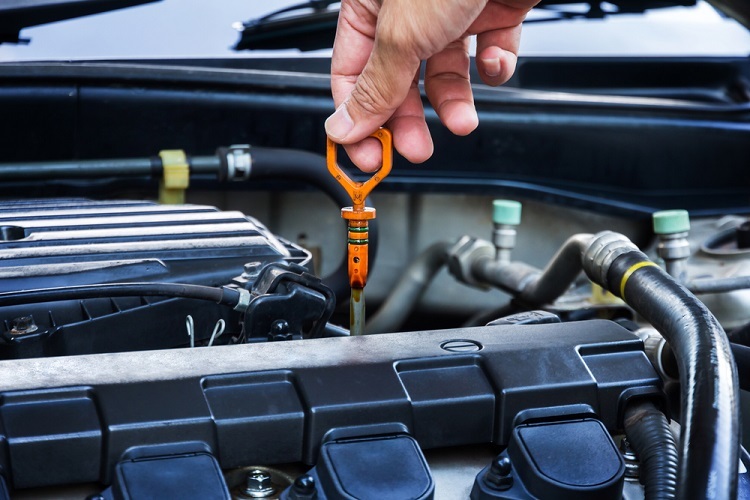
The dipstick tells you if your oil level is within the optimum range or if you need to add oil The dipstick is a metal rod with a handle on it usually in an easy-to-spot yellow color on which an oil-can symbol is stamped. The dipstick is housed in a small tube that leads downward and connects to the car's crankcase, where the engine oil is stored.
5. Remove and Clean the Dipstick

Pull the dipstick all the way out of the tube it's housed in. Use a clean rag or paper towel to wipe off any oil on the dipstick. Examine the tip of the dipstick once it's cleaned off. You'll see two lines: the lower line indicates that the oil level is one quart low, while the upper mark indicates "full." On some dipsticks the upper mark says "safe" and the lower mark reads "add."
6. Reinsert and Pull Out Again
Insert the dipstick back fully, then pull it out again. Now check the oil level.
7. Read the Oil Level
The dipstick has markings like “MIN” and “MAX”.
- If oil is near MAX → Level is good
- If oil is near MIN → You need to add oil
This process is known as Reading Dipstick.
8. Check Oil Condition
Look at the oil color and texture:
- Clean oil → Light brown or amber
- Dirty oil → Dark and thick
If it looks dirty, consider an Oil Change.
9. Add Oil if Needed
If oil is low, open the Oil Cap and pour oil slowly using a Funnel. This step is called Topping Up Oil.
10. Recheck the Level
If you've added a quart of oil, wait several minutes and check the oil level again. This gives the oil time to make its way down to the crankcase, which is at the bottom of the engine. Remember, your oil level doesn't have to be exactly at the upper mark for your engine to operate safely; it only needs to be between the lower and upper hash marks. If the oil level is in the safe zone, it's time to motor!
Types of Engine Oil
Choosing the right oil is also important. Here are common types:
- Synthetic Oil – Best performance and long-lasting
- Conventional Oil – Basic and affordable
- Semi-Synthetic Oil – Mix of both
Also, always check Motor Oil Grades recommended in your car manual.
How Oil Protects Your Engine
Engine oil supports Engine Lubrication by forming a thin layer between moving parts. It also maintains proper Oil Viscosity for smooth operation.
Without proper oil:
- Parts wear out quickly → Engine Wear
Engine gets too hot → Engine Overheating
How Often Should You Check Oil?
Experts recommend:
- Check oil every 2–4 weeks
- Before long trips
- After driving in extreme conditions
Regular checks are part of proper Checking Oil Level.
Final Thoughts
Learning how to check oil level in car is a simple but powerful skill every driver should know. It takes just a few minutes but can prevent serious engine problems and costly repairs. By regularly checking your oil, using the right type, and maintaining proper levels, you ensure your car runs smoothly for years to come. Make it a habit, and your car will thank you with better performance and longer life.
FAQs

Emila Hales
My name is Emila Hales. I've been living in the UAE for the past five years, and I absolutely love traveling. Writing about my travel experiences is something I enjoy, and I'm excited to share my adventures with others who are passionate about exploring new places.
Learn More